Practical roadmap
Choose the right first change. The people, systems, and handoffs are reviewed around the business challenge.
Practical roadmapBring your people, processes, and systems into a more connected way of working. Start with a clear priority and make the change in manageable stages.
A conversation first. A clear scope before any build.Agree the problem, dependencies, and outcome before choosing the technology.
Deliver useful changes in manageable stages with clear ownership.
Give the team the training, documentation, and support to make the change stick.
A defined scope, a clear owner, and an outcome you can check.
Digital transformation connects the people, processes, and systems involved in running a business. Quantum Reach starts with a defined operational problem, maps responsibilities, and sequences the work into agreed stages rather than replacing every tool at once.
Businesses across the US and Canada with a defined need for this service. Scope starts with the existing systems, the team using them, and the outcome to be checked.
Build around the business you have and the work ahead. Make each stage useful before moving on to the next.
Choose the right first change. The people, systems, and handoffs are reviewed around the business challenge.
Practical roadmapGive the work a path across teams. We identify the source, the receiving team, and the information each handoff needs.
Connected operationsMake the change useful in daily work. Responsibilities and the practical effect on daily work are defined with the team.
Team adoptionSee how the work comes together
Explore illustrative workflows, implementation decisions, and the checks that make the scope concrete.
Illustrative workflow
A clinic wants a clearer path between a booking and the administrative work around it.
Explore the workflowIllustrative workflow
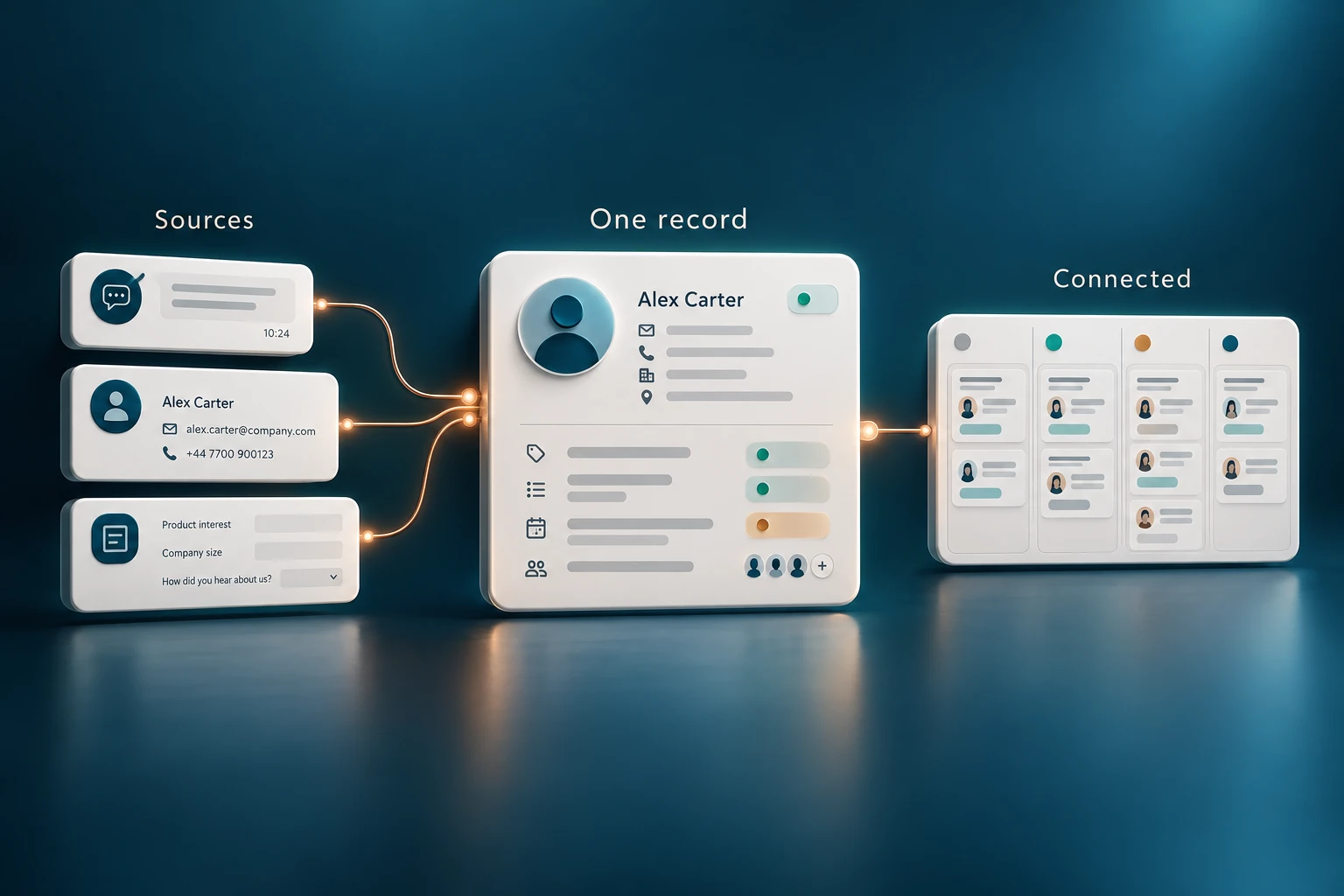
Customer information is spread across forms, inboxes, and business tools.
Explore the workflowSee how the work comes together
Explore how priorities, connected operations, and adoption fit together. Your requirements determine the sequence and the systems involved.
The people, systems, and handoffs are reviewed around the business challenge.
The result needs to work for the people who use it. We agree the scope, test the important details, and put ownership in place.
We map the current process with the people using it and agree what the change needs to accomplish.
The roadmap breaks the work into defined scopes, dependencies, and milestones your team can review.
Training, documentation, ownership, and feedback are included so the change can become part of daily operations.
Teams maintaining separate versions of the same information. Handoffs held together by email. Tools that no longer match the way the business operates.
Tell us where the work gets stuckFrom the first conversation to the final handoff, you know what happens next.
Step 1
We review your requirements, the current systems, and the people who rely on them.
Step 2
You get a defined scope, a clear owner, and milestones before implementation begins.
Step 3
We implement the agreed changes, test the important scenarios, and review the result with your team.
Step 4
Your team receives training and documentation. We review the results and agree the next priorities.
You should understand the approach before you commit to the work.
No. We prioritize the work and define manageable stages. Existing systems can remain where they support the agreed process.
We look at the business problem, the impact on customers and staff, and the dependencies. The first stage should have a clear purpose and a practical way to assess the result.
The people using the process help define requirements, review the workflow, and test the change. Training and ownership are planned alongside the implementation.
You receive the agreed scope, responsibilities, milestones, and acceptance criteria. Larger programs can be broken into separate stages with review points between them.
Start with the part that needs to work better
Tell us where the current process no longer fits. We’ll help turn the challenge into priorities, a practical scope, and a clear next step.
Let’s find your starting pointA conversation first. A clear scope before any build.